


 Opening soon
Own a piece of Neuralink
before it goes public.
The Neuralink pre-IPO allocation opens soon. Join the waitlist to get first access the moment it goes live.
Neuralink — the only company implanting brain–computer interfaces.
Its flagship N1 “Telepathy” implant lets people with paralysis control a computer — moving a cursor, typing, even speaking — by thought alone. 26 people already live with one, implanted in humans at scale.
Two Years of Telepathy — Neuralink trial participants using their implants today. Watch on neuralink.com ↗
- 26 humans implanted in ~30 months. From the first patient in Jan 2024 to 26 by Jul 2026 — with 0 serious adverse device events reported.
- The valuation re-rated $9B → $44B in 12 months on secondary venues. The next primary round is widely expected above $45B.
- More capital than the whole field combined. Neuralink has raised $1.3B+ — over 1.5× all BCI rivals together.
- 1,024 electrodes per implant today — on a public roadmap to 25,000 channels by 2028.
What Neuralink is
Neuralink builds a generalized brain–computer interface — a system that restores autonomy to people with unmet medical needs today, and aims to expand what a human brain can do tomorrow.
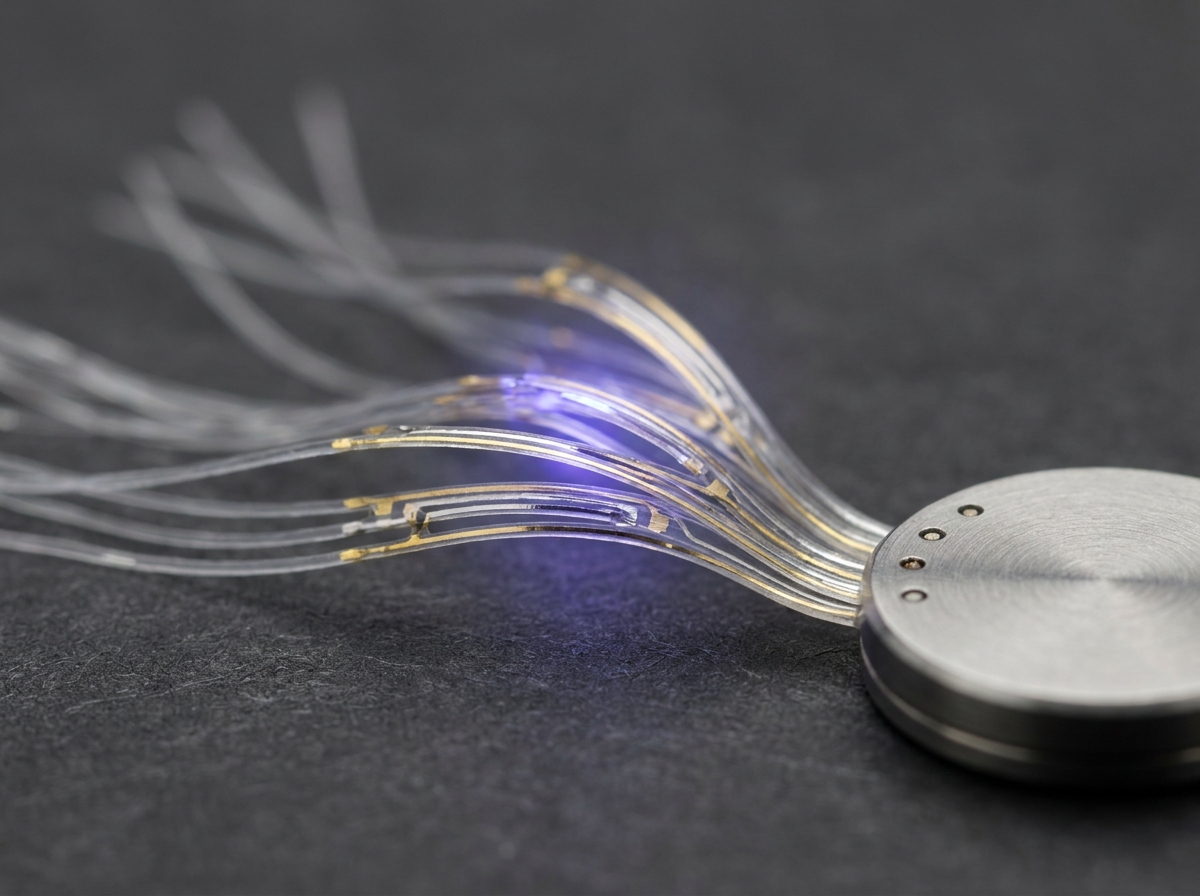
The product is one system made of two machines. The N1 "Telepathy" implant — coin-sized, fully wireless, with 1,024 electrodes on 64 threads finer than a human hair — reads neural activity and turns intention into action. The R1 surgical robot implants it, placing threads while avoiding blood vessels at 1.5 seconds per thread.
Since January 2024, 26 people with paralysis or ALS have received the implant. They move cursors and play chess by thought, operate a robotic arm, and — in the VOICE study — speak again through a reconstruction of their own voice.
A Neuralink participant moves a robotic arm by thought — the N1 implant in action. More on neuralink.com ↗
Why Neuralink wins
Scale in humans. Neuralink has implanted 26 people; no competitor has implanted more than a handful. Synchron — the closest rival — has around ten patients since 2019 on a lower-bandwidth device. Patients are the moat: every implant compounds the safety record, the decoding data, and the regulatory case.
Bandwidth leadership. 1,024 electrodes today, 3,000 in the Blindsight generation, and a public roadmap to 25,000 channels by 2028.
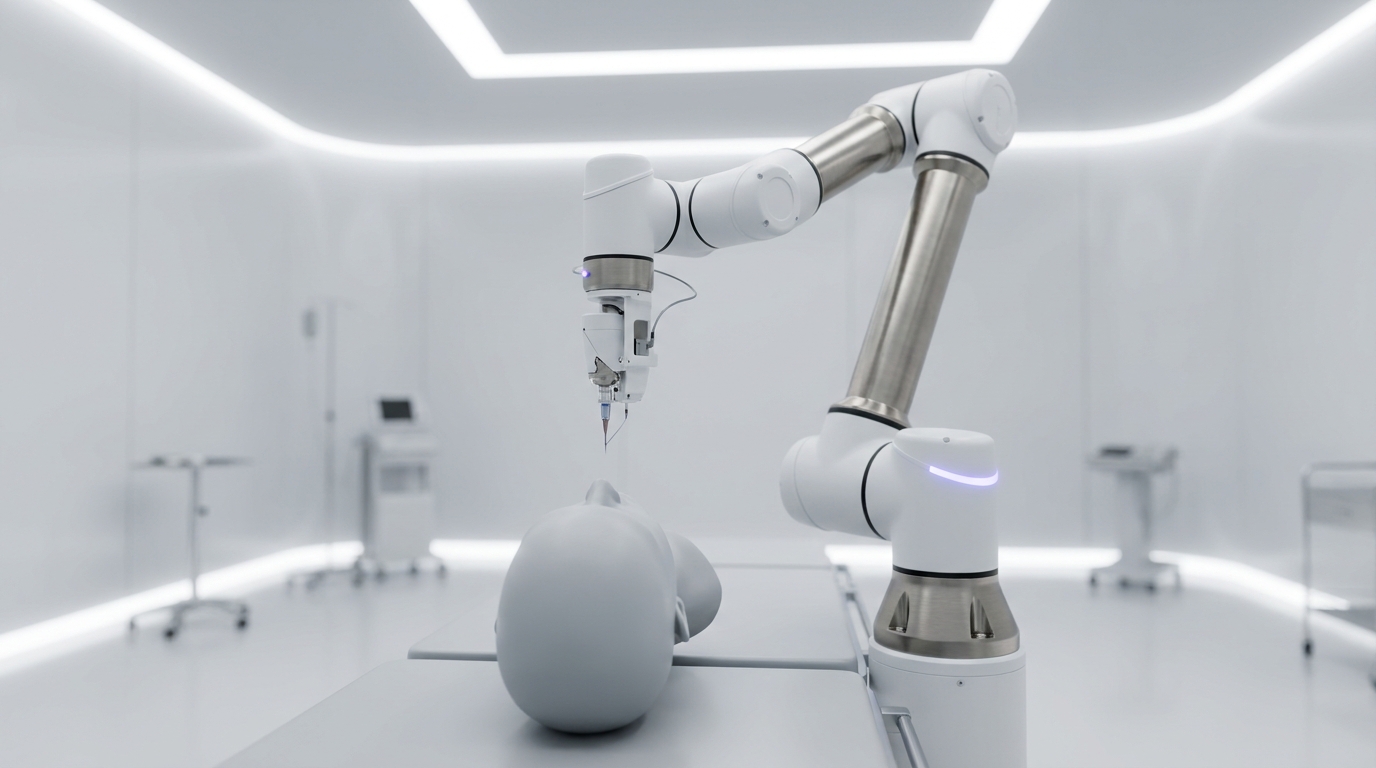
Surgery as manufacturing. The R1 robot removes the scarcest resource — neurosurgeon hours — from scaling. In May 2026 it reached every region of the brain, opening Parkinson's, epilepsy and depression.
Capital dominance. $1.3B+ raised from ARK Invest, Sequoia, Founders Fund, G42 and QIA — more than 1.5× every BCI rival combined.
 Near-automated surgery · the volume unlock
Why now — the 2026 inflection
2026 is the inflection year. High-volume production and near-fully-automated surgery were announced for 2026. Blindsight — the vision-restoration implant, an FDA Breakthrough Device since 2024 — enters first-in-human trials, opening a second product line.
The regulatory clock is running. A pivotal trial is expected in 2026, a PMA submission around 2027, first commercial availability around 2028 (projections). Private valuations re-rate before commercialization — not after.
Waiting has a price. The June 2025 round valued Neuralink at $9B. Twelve months later, secondary venues imply ~$44B — nearly 5×. And there is no IPO announced: pre-IPO allocation is currently the only way in.
How you make money
You buy pre-IPO shares at a $44B entry — $257.25 per share — before the next primary round re-rates the price. Your money can grow two ways: the private valuation rises while you hold, and you realise the gain when a liquidity event happens.
Lock in $257.25 / share now — the pre-IPO price, below where the next round is widely expected to price.
High-volume production, near-automated surgery and the Blindsight trials are the catalysts that re-rate private valuations.
Turn your shares back into cash through one of the three routes below.
Three ways your shares turn into cash
Neuralink lists publicly and shares become freely tradable. None is announced yet — which is exactly why the entry is still early.
A strategic buyer acquires the company and your shares are bought out for cash or acquirer stock.
Sell your allocation to another investor on the Binaryx P2P market — any time before an IPO, whenever there's a buyer.
The structure, in simple words.
Neuralink stock is purchased by the fund for this deal.
A dedicated legal vehicle that holds the acquired shares.
The DAO LLC holds the allocation on behalf of investors.
Tokens make you a shareholder of the DAO LLC, with rights to this deal's proceeds.
The asset manager and the fund are registered in Delaware — the certificates above are the state-filed originals. Simplified overview; the DAO-LLC deal vehicle and full legal wording will be published here and in the data room. Verify on Delaware's registry ↗
Deal terms.
What could $ become?
Illustrative only: based on the modeled $44B → $260B exit scenario, not a forecast or guarantee. Entry (up to 5%) and success (up to 20%) fees apply; see the fees under Terms.
The full data room.
From $2B to a $260B scenario.
*The exit bar is one financial-model scenario, not a forecast.
The road to a $260B+ valuation.
- 2026
Blindsight enters first-in-human trials
A 3,000-electrode visual-cortex device — a second product line that restores sight beyond paralysis.
- 2026
High-volume production begins
Automated surgery and volume manufacturing — an ambition of 20,000 surgeries a year by 2031. Volume turns a clinical program into a business.
- 2026
R1 reaches any brain region
Parkinson's, epilepsy and depression move onto the roadmap — far beyond the original motor cortex.
- 2027
PMA submission to the FDA
The pivotal trial converts into a marketing application — the last regulatory gate before commercialization.
- 2028
Commercial launch · the modeled $130B mark
First commercial availability. Approval, not invention, is what remains — and it re-rates the valuation toward the $130B interim mark.
- 2030
The modeled $260B exit scenario
Post-launch adoption compounds the valuation to the $260B exit mark — roughly 5.9× the $44B entry, before fees. A scenario, not a forecast.
- Mid-2030s
A $12–15B BCI market
From ~$3.5B in 2026, compounding ~16% a year — the tailwind under the whole thesis.
No competitor comes close.
The product is real — and heading into more trials.
 First human implant · Jan 2024
Telepathy (N1)
A coin-sized, fully wireless implant. 1,024 electrodes on 64 threads turn intention into action — cursor, keyboard, games, a robotic arm.
 FDA Breakthrough Device · 2024
Blindsight
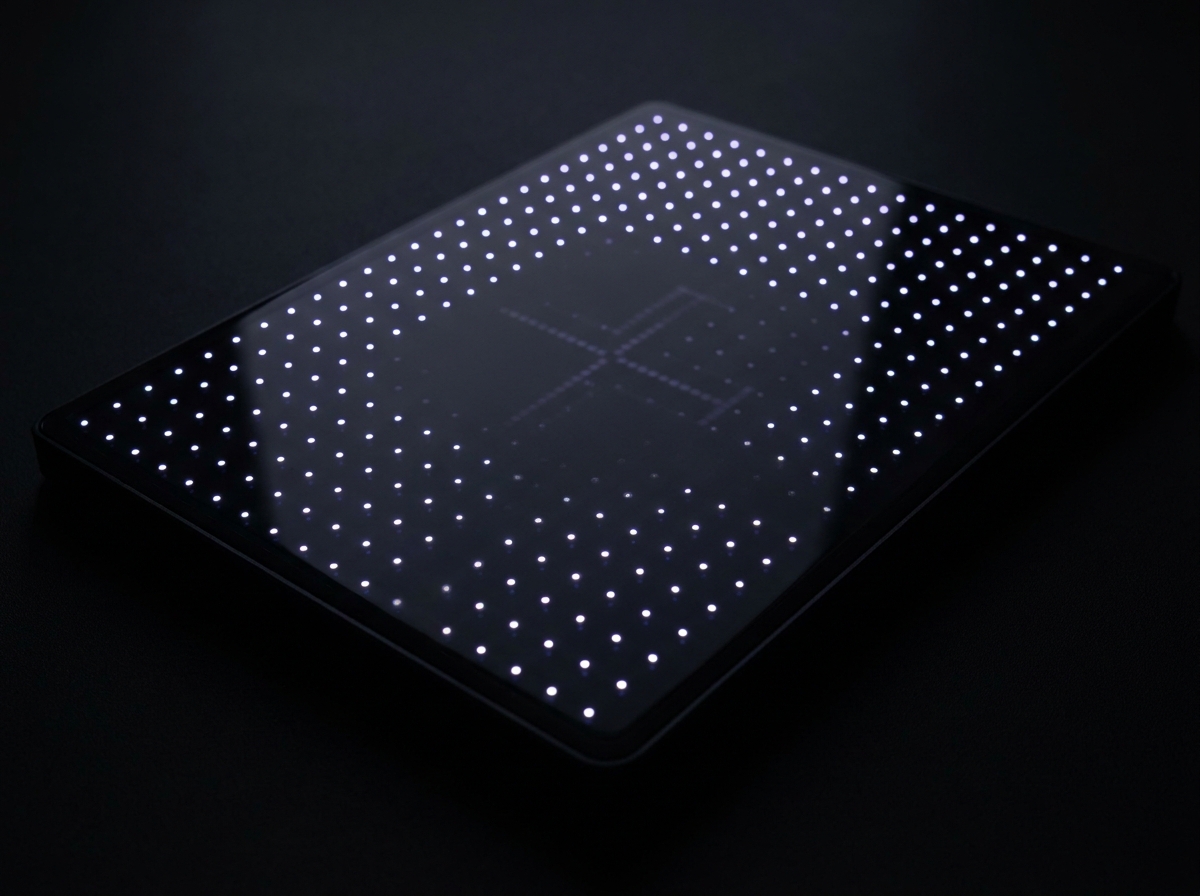
A visual-cortex implant to restore functional sight — no working eyes or optic nerve required. First-in-human trials targeted for 2026.
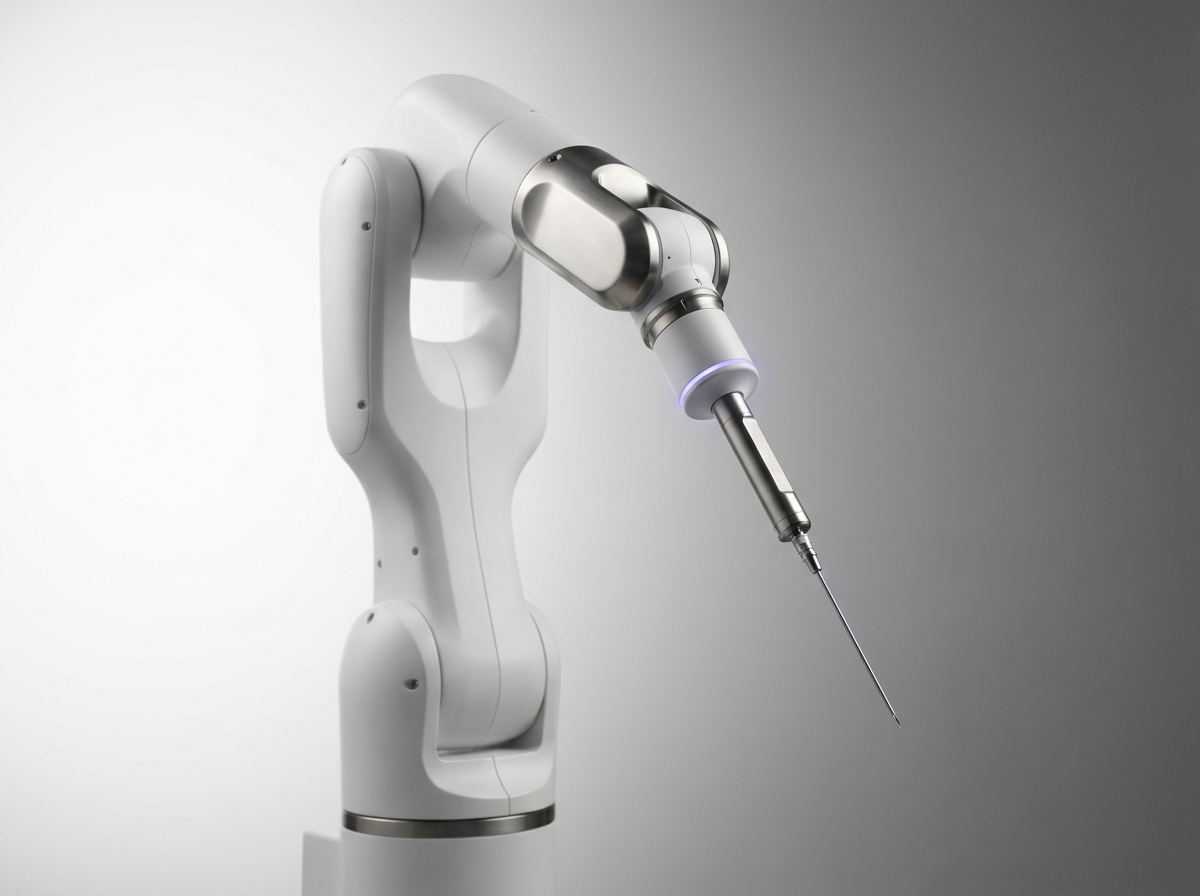 Reaches any brain region · 2026
R1 surgical robot
Implants 64 threads in minutes while avoiding blood vessels — 1.5s per thread. Near-fully-automated surgery is the 2026 target.
The people behind it.




Backed by $1.3B+ from the world's top funds.








$650M Series E · Jun 2025 · $9B pre-money.
Neuralink, covered on our blog.
Questions, answered.
A pre-IPO allocation of Neuralink shares, held through Binaryx. You choose your amount — from $250, at $257.25 / share (est.) — and realise value at a liquidity event: an IPO, an acquisition, or a secondary sale.
Up to 5% once at entry, and up to 20% of profit at exit — charged only on gains, never on your principal. Use the calculator above to see the full math on any amount.
Allocation is limited. This round has a fixed amount of Neuralink shares available. You can invest right away, but orders are filled in the order they're placed: first invest, first allocated. If the round fills before your order is reached, the amount we couldn't allocate is returned to your Binaryx balance automatically, so you're never charged for shares you don't receive.
The $257.25 / share price reflects Neuralink's current company valuation and is indicative. We'll always aim to secure you a better entry price. If the final price ends up more than 10% higher than shown, we refund your investment to your Binaryx balance, so you're never committed to a materially worse deal than advertised.
Think of it as a long-term investment: you're getting in early on a private company and growing with it toward an IPO, acquisition, or sale — so it suits money you can set aside for a few years. You're not locked in, either — once the allocation round closes, your tokens can be traded on the Binaryx P2P market, so you're free to sell to another investor whenever there's a buyer.
More flexible than a typical private investment. Once the allocation round closes, your tokens can be traded on the Binaryx P2P market, so you can sell to another investor whenever there's a buyer — no need to wait years for a final exit. How quickly you sell simply depends on demand at the time.
Buying shares in a late-stage private company before it lists on a public exchange — usually at a price below where the next round or an IPO is expected to price. You enter ahead of an IPO or acquisition and aim to benefit if the private valuation rises.
A public stock trades on an exchange and can be sold any day. A pre-IPO share is private — there's no public exchange, so it's a longer-term hold, typically 1–5 years to a full exit like an IPO, acquisition, or sale. On Binaryx you can still trade it peer-to-peer in the meantime, whenever there's a buyer.
From Neuralink's funding rounds and recent transactions between private investors on secondary venues. The $257.25 shown is an estimate of that level; the price you actually pay is fixed when the deal closes and can differ from the indicative figure.
Right of First Refusal. When a private share is sold, the company or its existing shareholders may have a window (often ~30 days) to buy it first at the agreed price. If they exercise it, the trade doesn't complete and your funds are returned; if they pass, it settles to you.
No. Pre-commercial companies like Neuralink reinvest everything into growth. Your return comes only from an increase in the company's valuation, realised at a liquidity event — not from dividends or interim payouts.
You keep your stake. An exit could still come through an acquisition, a later listing attempt, or a secondary sale to another private investor. But timing is unpredictable and an exit is never guaranteed — plan to hold for the long term.
Your return would be lower than the modeled scenario, or negative. Pre-IPO is venture-stage: if the company were to fail, the shares can lose all their value and you could lose your entire investment. Only commit capital you can afford to lock up — or lose.
It holds FDA Breakthrough Device designations and runs approved human trials, but doesn't yet have marketing approval. The modeled path — pivotal trial in 2026, PMA around 2027, launch around 2028 — is a scenario, and regulatory timelines can move in either direction.
26 people use the implant today; the first has lived with it for ~2.5 years. Early issues — like thread retraction in Patient 1 — were recovered through software. Longer-horizon durability data doesn't yet exist anywhere in the industry; it accrues with every implant-year, and Neuralink has the most of it.
Musk sets the vision and draws the capital; day-to-day execution sits with co-founder DJ Seo (President & COO) and CEO Jared Birchall. As at Tesla and SpaceX, sentiment around Musk can move private-market pricing in both directions.
Synchron, Paradromics, Precision Neuroscience and Blackrock Neurotech are all active — Synchron could reach a first approval with its less-invasive device. Neuralink's edge is bandwidth (1,024 electrodes), human scale (26 patients vs a handful) and capital ($1.3B+ — more than the field combined).
That's the 2026–27 test: high-volume implant production, near-automated R1 surgery, and a 4th-gen chip on Samsung's 4nm process (test chips H1 2027). These milestones are still ahead — and they're the catalysts the 2026–28 thesis is built on.
Pre-commercial companies raise repeatedly, so some dilution is expected. New rounds have also marked the valuation up — the $650M Series E priced at $9B, and secondary venues now imply ~$44B. Your share count stays fixed; the total share count grows.
Not yet — like most pre-commercial medtech. The valuation reflects the expected post-approval market rather than current sales; first commercial availability is modeled around 2028. Clinical results, in either direction, are what re-price it.
Projected figures marked with * are based on one scenario of a financial model and do not represent any guarantee or promise of returns. Secondary-market prices are estimates produced by trading venues' models, not executed trade prices; wide bid/ask spreads, transfer restrictions and rights of first refusal apply. Neuralink Corp. has not announced an IPO. Estimates marked "est." derive from third-party sources believed reliable but not verified. Pre-IPO investments are speculative, illiquid and may result in total loss. This page is not investment advice.
